
Ireland, the XV of the Shamrock
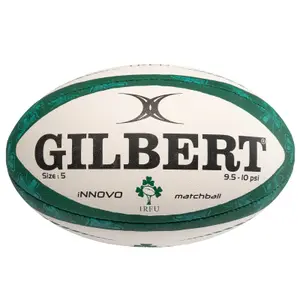
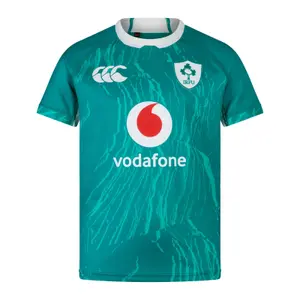
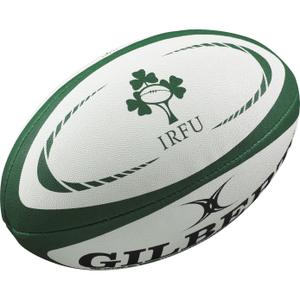

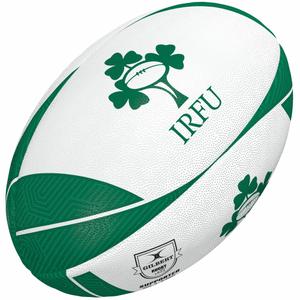
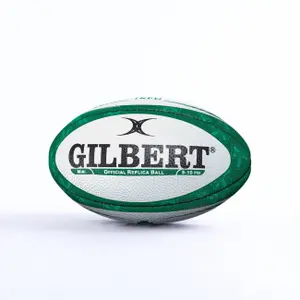
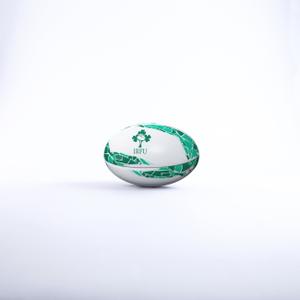
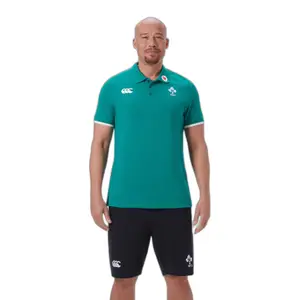
Our Ireland page brings together the colours of the XV of the Shamrock: classic home shirt with long sleeves and a traditional collar, cotton polo to wear on match days, Gilbert ball in Irish colours and flag for the stands. A selection to support a team that represents the whole island, from Dublin to Belfast, with our insights on its history and provinces.
The green of the entire island.
The Shamrock, a selection that crosses borders
Founded in 1879, the Irish federation was not divided by the partition of the island in 1921: the Shamrock team still brings together players from the Republic of Ireland and Northern Ireland. The federation relies on its four provinces, Leinster, Munster, Ulster and Connacht, for which it directly manages the contracts of the internationals, allowing it to manage their game time throughout the year. These teams also shine in the European Cup: Ulster won it in 1999, Munster in 2006 and 2008, Leinster for the first time in 2009, while Connacht, for a long time the underdog, clinched the Celtic championship in 2016.
The other nations of the Tournament
The nations in the Tournament are also:
All the nations in the Tournament are gathered on the VI Nations page.
Grand Slams and first victories over the All Blacks
The first Grand Slam for Ireland dates back to 1948, led by fly-half Jack Kyle; it wasn’t until 2009 that the second one was achieved, snatched from Cardiff thanks to a drop goal from Ronan O'Gara in the last minutes. The Shamrock completed the five in a row again in 2018 and then in 2023, the second time in front of their fans at the Aviva Stadium, built in Dublin on the historic site of Lansdowne Road. For a long time, the All Blacks remained unbeaten against Ireland: the first victory came in November 2016 in Chicago, 40 to 29, followed by a first win in Dublin in 2018 and a series win in New Zealand in the summer of 2022.
Classic jersey, polo shirt and Gilbert ball for fans
The classic long-sleeve jersey, with its traditional collar, harks back to the outfits worn by the Irish in the amateur era; it’s worn just as well in the stands as in the pub on Tournament nights. The polo shirt in cotton, more formal, accompanies outings and post-match receptions. For playing, the Gilbert ball in the colours of the Shamrock is handled in the garden or at the club, Gilbert also being the supplier of the official ball for the Six Nations Tournament. The flag, finally, is displayed in Dublin as in Saint-Denis, where fans from both camps willingly share the evening in a atmosphere renowned for its warmth.
Good deals
Good deals can be found in good deals, promotions, clearance, sales, Black Friday. The new arrivals showcase the latest collections, and items shipped in 24h are prepared and dispatched within 24 hours. The highlights of the year follow a consistent order: the Black Friday at the end of autumn, the holiday season, the winter sales, the French Days in spring, then the summer sales and back to school.
Frequently Asked Questions
Why does Ireland have two anthems?
In Dublin, players sing the anthem of the republic, Amhrán na bhFiann, then “Ireland's Call”, composed in 1995 by Phil Coulter to unite players and supporters from the north and south. Away from home, only this second song is played.
Where is France-Ireland played?
The match alternates between the Stade de France and the Aviva Stadium in Dublin, which has just over fifty thousand seats. It is often scheduled during the first days of the Tournament and weighs heavily in the title race.
Which players have made their mark on Irish rugby?
Brian O'Driscoll, centre and captain with twenty-six tries in the Tournament, Paul O'Connell, iconic second row for Munster, or Johnny Sexton, fly-half voted world player of the year in 2018.
Does Ireland have a women's team?
Yes, the Irish women compete in the Women's Six Nations Tournament and the World Cup. They achieved their first Grand Slam in 2013 and defeated New Zealand in the 2014 World Cup, held in France.
What size rugby ball should you choose based on age?
Size five corresponds to the match ball for adults and teenagers, size four for children around ten years old, and size three for younger ones. A mini-ball is usually kept as a souvenir or used to practice ball handling.






