
Balloon Packs for Clubs and Schools



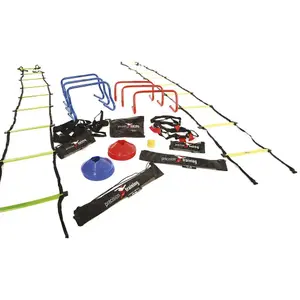
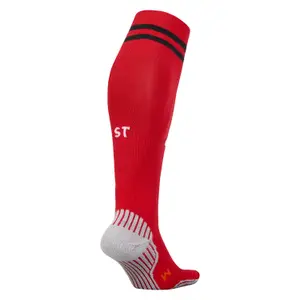
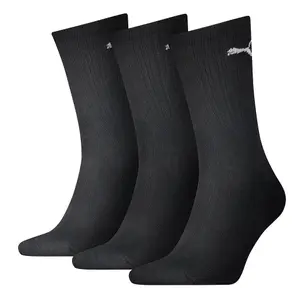
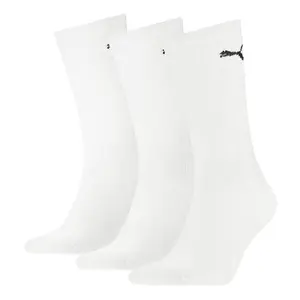

Our Balloon Packs page showcases lots of rugby balls intended for clubs, rugby schools, and sporting sections, along with our tips on choosing the size according to age group, calculating the number of balls needed, and maintaining a set that serves every session, from the youngest to the seniors.
Balls for the entire rugby school.
Size three, four or five: one lot per category
A club doesn’t use just one ball format. The size three, which is smaller and lighter, is used for children up to about nine or ten years old; the size four takes over up to about fourteen years old; and the size five is for cadets, juniors and seniors. The game rules specify a weight of 410 to 460 grams and a length of 280 to 300 millimetres for the latter. A lot for each category ensures that the balls have the same feel, making it easier to learn passing and preventing balls that are too heavy for small hands.
The Clubs Space
The Clubs Space is also available in:
All collective equipment is gathered on the clubs space page.
How many balls for a training group
To ensure everyone gets to touch the ball frequently, we estimate one ball for every two or three players in passing and kicking drills. So a group of twenty players requires eight to ten balls, plus two or three spare pieces to cover losses, punctures and those that end up behind the sideline. For younger players, one ball per child is ideal during handling games. Training balls, with thicker and more durable coverings, are better suited for lots than match balls, which are more fragile on abrasive surfaces.
Pressure and maintenance of a ball park
The game rules set the pressure of a ball between 65.71 and 68.75 kilopascals, or 9.5 to 10 pounds per square inch, which is checked with a pump equipped with a gauge. An over-inflated ball bounces unpredictably and can hurt hands, while a ball that is too soft skews kicking play. After a session in the rain, wipe the balls down and let them dry at room temperature, away from a heater, before storing them in a ball bag to protect them from moisture. Moistening the needle before inserting it helps preserve the valve.
Good deals
Good bargains can be found in the good deals, promotions, clearance, sales, and Black Friday. The new arrivals showcase the latest collections, and items shipped in 24h are prepared and sent within 24 hours. The key events of the year come in a steady order: the Black Friday at the end of autumn, the year-end festivities, the winter sales, the French Days of spring, followed by the summer sales and back-to-school season.
Frequently asked questions
How to mark the balls with the club's name?
An indelible marker on the smooth area near the valve is sufficient, showing the club's name and the category. This makes counting easier at the end of the session and ensures lost balls are returned during tournaments.
Is a foam ball useful for the youngest?
Yes, for baby rugby and the first sessions, a foam ball reassures children who are afraid to catch it. It allows them to practice passing and receiving without fear before moving on to a real size three ball.
Do you need an electric pump to inflate a club's balls?
For about ten balls, a manual pump with a gauge is adequate. Beyond that, an electric pump saves time and ensures uniform pressure across the whole lot, as long as each ball is checked with the gauge.
When should you replace a worn ball?
When its surface becomes smooth and slippery, it loses its shape, or it can’t hold pressure from one session to the next. In an active club, a part of the lot is replaced each year rather than the entire park all at once.
Can you leave the balls inflated between sessions?
Yes, as long as they are stored in a dry place away from heat. For a long break, such as during the summer, slightly deflate them to relieve the seams and pump them back up to the right pressure when you return.






