
Rugby shoulder pads for kids


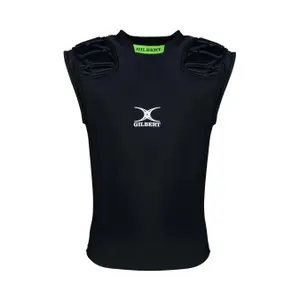


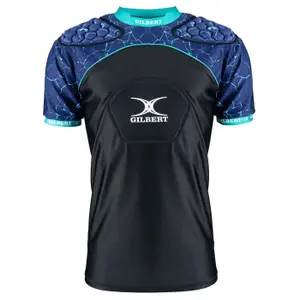

Our selection of children's rugby shoulder pads includes the Canterbury Pro, Gilbert XP1000 and Force XV, fitted protective tops that cushion tackles and rucks at the shoulders and collarbones. Models designed for young players who are learning to tackle, with our tips on regulations, sizing and care.
Cushioning impacts, starting from rugby school.
Canterbury Pro, Gilbert XP1000, Force XV : compare the models
The Canterbury Pro is a padded protection vest featuring VapoDri technology that wicks away sweat and mesh panels for ventilation: a lightweight model that allows free arm movement for tackling and passing. The Gilbert XP1000 combines EVA foam and impact-resistant polyethylene, with adjustable straps to fit the body shape. The shoulder pad Force XV, from a rugby-focused brand, offers simple and discreet protection, suitable for beginners looking for reassurance during their first contacts.
Other protections
Children's protections also include:
All children's protections are gathered on the children's protections page.
Thickness, density, label: World Rugby requirements
A shoulder pad worn in a match must be World Rugby approved, with certification label. The regulations require soft and thin materials: no part exceeds one centimetre in uncompressed thickness or a density of forty-five kilograms per cubic meter, with padding limited to the shoulder and collarbone. The aim is not to turn the child into a heavily-armoured player, but to absorb friction and minor repeated impacts without creating a hard surface that could be dangerous for opponents.
Chest size and fitting under the shirt
Size is determined by chest circumference, measured under the armpits, with arms down by the sides. A well-fitted shoulder pad hugs the skin without restricting breathing, with the foam focused on the tops of the shoulders; if it is too big, it rides up towards the neck on the first tackle. It is worn directly under the shirt, which should be loose enough to cover it. It should be washed at thirty degrees, in a mesh bag, without fabric softener, and then dried flat so that the foam retains its shape from one session to the next.
Good deals
Good deals can be found in the promotions, sales, clearance, Black Friday. Items shipped in 24h are prepared and sent within 24 hours. The major events of the year follow a stable order: Black Friday at the end of autumn, the end-of-year holidays, the winter sales, the French Days in spring, then the summer sales and back to school.
Frequently asked questions
Shoulder pad or shoulder pads: what's the difference?
In rugby, the term shoulder pad refers to the complete protection at the top, while shoulder pads refer to the foam it contains at the shoulders. Both terms refer to the same equipment, authorised by World Rugby under certain conditions.
At what age should a child wear a shoulder pad?
As soon as the child practices tackling, if contact worries them or if they play in the front row. It remains optional and mostly depends on their feelings: some wear it from their first sessions, while others never put it on.
Does a shoulder pad with gel offer better protection?
Some models have gel inserts for cushioning. The regulations do not impose any specific material, only thickness and density limits checked by the label: thus, fit and comfort are the main criteria.
Does the shoulder pad hinder passing?
A properly sized shoulder pad with thin foam allows free arm movement for passing and tackling. If the child complains of rubbing at the neck or blocked shoulders, it is often a sign that the model is too big or poorly positioned.
Is the Gilbert XP1000 available in child size?
Yes, it comes in a child version, with its EVA foam, polyethylene reinforcements, and adjustable straps that adapt to the body shape. It is suitable for players looking for a more secure fit.






