Canterbury Stampede for the forwards


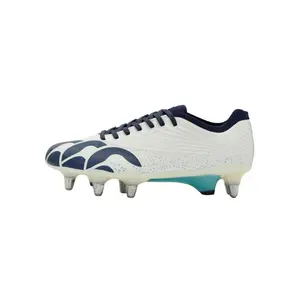
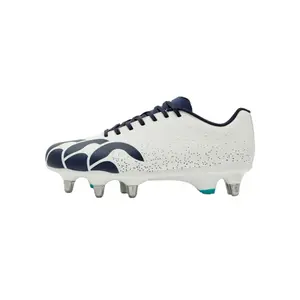
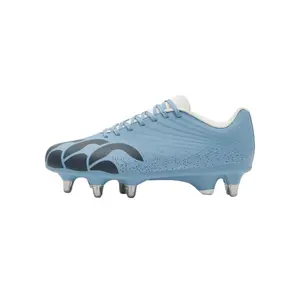
Our Canterbury Stampede page brings together the shoes designed by the New Zealand brand for forwards: props, hookers, second and back rows who thrive in scrums, rucks, and mauls. Stiff sole, eight replaceable studs, spacious forefoot: the Stampede prioritises stability and drive over lightness, with several finishing levels depending on the level of play.
Stability for the scrum.
Eight studs to anchor the pack
The Stampede Groundbreak rests on a sole with eight metal studs, measuring ten eighteen millimeters in the Team version. This setup increases anchor points and distributes weight across the foot: the prop stays firmly planted when the scrum turns, the lock drives in a maul without losing support. On the wet pitches of winter, the Stampede's preferred ground, these metal studs bite deeply into the earth. They can be replaced one by one as they wear out, extending the shoe's lifespan.
Other Canterbury ranges
The Canterbury shoes are also available in:
All Canterbury shoes can be found on the Canterbury page.
Flightbeam sole and wide forefoot: the comfort for forwards
The Flightbeam sole made of rigid TPU in the Stampede transmits energy to the ground without deforming: the prop's push doesn't get lost in the shoe's flex, and legs stay fresher at the end of the match. The moulded heel locks the back of the foot during contact phases, while the spacious forefoot allows toes to splay, providing real relief for heavy builds whose feet widen under load. This generous fit makes the Stampede a natural choice for players with wide feet who feel cramped in a speed shoe.
Team, Pro or Elite: which Stampede for your level
Like the other Canterbury ranges, the Stampede comes in three levels. The Team, sturdy and no-frills, is suitable for club forwards and young players who are discovering the pack positions: it focuses on the essentials, durability and efficiency. The Pro caters to competitors who play every weekend and seek more refined support. The Elite, the most technical, brings together the most advanced materials for high-level forwards. Whatever the level, the SG version, with metal studs, is the one for the muddy pitches where the essentials of winter matches are contested.
Good deals
Good deals can be found in good deals, promotions, clearance, sales, Black Friday. The new arrivals showcase the latest models. The highlights of the year follow a steady order: the Black Friday at the end of autumn, the holiday season, the winter sales, the French Days in spring, then the summer sales and back-to-school.
Frequently asked questions
Is the Stampede suitable for a blindside flanker?
Yes, especially for a blindside flanker who carries the ball at contact and clears a lot of rucks: they benefit from the same stability as the front row. A more mobile flanker, who covers large distances, might find it a bit heavy.
Why a specific shoe for forwards?
In the scrum, the prop exerts considerable force through their feet: a soft sole would bend and lose effectiveness. A forward shoe, being stiffer and wider, keeps supports stable and better protects the foot in scrums.
How to change the studs on a Stampede?
Unscrew the worn studs with a stud key, clean the threading with a brush, then screw in the new ones by hand before giving them a final moderate tighten with the key. It is preferable to replace the complete set to maintain balanced support.
Can the Stampede be worn on artificial grass?
The metal studs of the SG version are not permitted on most artificial turfs, where they grip too much and damage the surface. To train on artificial grass, a forward should have a second pair of moulded stud shoes.
What size to take in Stampede?
Your usual size is sufficient in most cases, as the forefoot is already spacious. Measure your foot at the end of the day, wearing match socks, and keep about half a centimetre in front of the big toe to avoid black nails.