
Canterbury Speed for backs
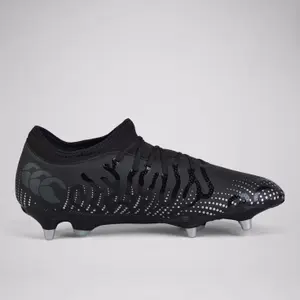
Our Canterbury Speed page brings together the range of rugby shoes that the New Zealand brand dedicates to fast players: wingers, backs, centres, and halves. Lightweight, well-fitted, and designed for acceleration as well as kicking, they come in three levels, Team, Pro, and Elite, with screw-in studs for soft ground or moulded for firm pitches.
Lightness and speed, signed Canterbury.
Team, Pro or Elite: three levels of Speed
The Canterbury Speed range comes in three levels that share the same idea: a low, slim and fitted shoe for players whose strength is acceleration. The Team version is aimed at club players and young ones discovering a speed shoe, featuring a textured synthetic upper that enhances ball control. The Pro targets regular competitors who rely on their explosive support in every match. The Elite, the lightest version, is reserved for top-level players, with more technical materials and a very snug fit around the foot.
The other Canterbury ranges
The Canterbury shoes are also available in:
All Canterbury shoes are gathered on the page Canterbury.
Vaposkin upper and free heel: technology serving backs
For the Elite version of the Speed Infinite, Canterbury used AI-assisted design, which places stitched reinforcements only where the foot needs it. The upper is made of monomesh covered with a thin, low-absorbency Vaposkin membrane, keeping the shoe light even in the rain. The heel, free from any constraints, allows the ankle to move freely for precise ball striking, a detail appreciated by fly-halves and backs responsible for kicking. The sole combines Flightbeam technology and a Pebax material of plant origin, sourced from castor beans, to return energy with each step.
Speed SG or FG: adapting the sole to the field
The Speed comes in an SG version for soft ground, with aluminium screw-in studs, and an FG version for firm ground, with moulded studs. The former is essential on wet, grassy pitches during winter when the winger needs to plant their foot without slipping during a sidestep. The latter suits the dry pitches of early autumn and spring, where long studs would get stuck in hard ground and tire the ankles. As World Rugby limits stud length to twenty-one millimetres, we check their wear before each match and keep a stud key in our bag.
Good deals
Good bargains can be found in good deals, promotions, clearance, sales, and Black Friday. The new arrivals showcase the latest models. The highlights of the year follow a steady rhythm: the Black Friday at the end of autumn, the end-of-year holidays, the winter sales, the French Days in spring, followed by the summer sales and back-to-school season.
Frequently asked questions
Is the Speed suitable for a scrum-half?
Yes. The scrum-half makes quick bursts around rucks and passes close to the ground: a low and light shoe like the Speed allows for maximum agility. However, a half-back who often engages in contact might prefer a more protective upper.
Does the Canterbury Speed run small?
It fits closely to the foot, especially in the Elite version, designed for a snug fit. Stick to your usual size, measured at the end of the day with a sports sock; someone with a wide foot might try half a size up.
Can a back-row player wear Speed?
A very mobile flanker, who covers a lot of ground away from the breakdowns, will find it suitable. A back-row player who frequently carries the ball into contact will benefit more from the stability and wider sole of a shoe designed for forwards.
How do you break in such a light shoe?
Wear it first for two or three short training sessions before taking it into a match, with technical seamless socks. The fine upper will quickly conform to the foot, but wearing it straight on match day could lead to blisters on the heel.
Can you wear Speed on synthetic surfaces?
The screw-in studs of the SG version should be avoided on artificial grass, where they grab too much on the fibres. The FG version with moulded studs is better suited for firm surfaces; we also check the guidelines from the pitch manager.






