
Training shirts for kids






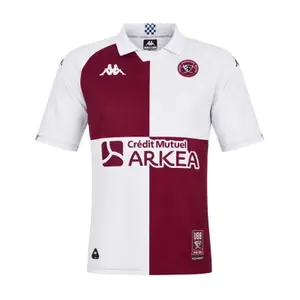
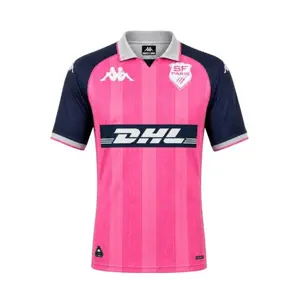
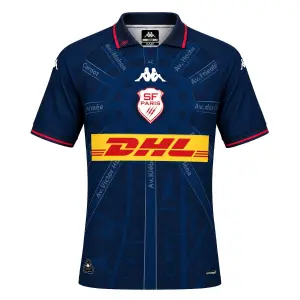
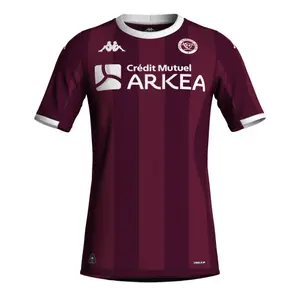
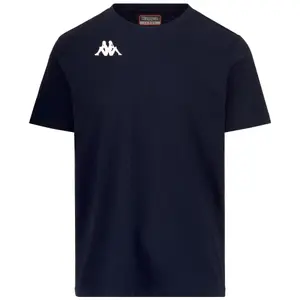


Our selection of training jerseys for kids includes models designed for sessions, such as the Gilbert Xact Striped and the Force XV Victoire, as well as jerseys in the colours of Stade Toulousain, Union Bordeaux-Bègles, Stade Rochelais, XV de France, or All Blacks. We explain what distinguishes a session jersey from a supporter version and how to choose the size for a young player.
The jersey that stands up to everything.
Reinforced collar and strengthened seams: what makes a training jersey
A training jersey endures stresses that no other garment experiences: the defender grabs the collar, pulls on the sleeves and rubs the fabric against the ground. The Gilbert Xact Striped, with its wide horizontal stripes reminiscent of old British jerseys, features a reinforced twill collar and strengthened seams at stress points. The Force XV Victoire, from a French rugby brand, is available in kids' and adult sizes, allowing players and coaches to match. The two can withstand frequent washes without losing their shape or colours.
The rest of the teamwear
The kids' teamwear also includes:
All the kids' teamwear can be found on the kids' teamwear page.
Stade Toulousain, UBB, All Blacks: when to wear a club jersey
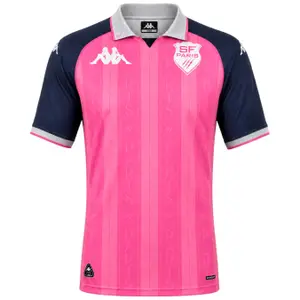
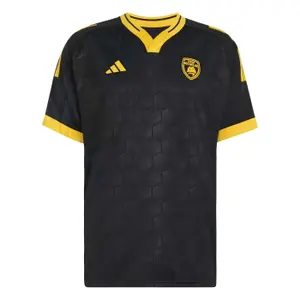
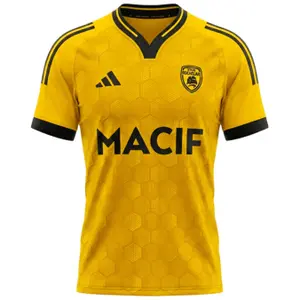
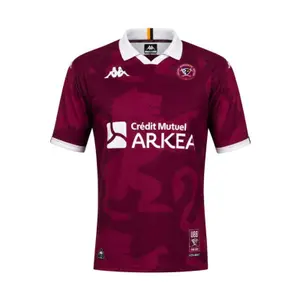
Club and national jerseys inspire young players, who enjoy training in the colours of their idols. The fourth jersey of Stade Toulousain, the home jerseys of Union Bordeaux-Bègles and Stade Rochelais, as well as those from RC Toulon, Stade Français or Castres Olympique, like the black jersey of the All Blacks, are supporter versions: looser fit, with badges and logos applied to the fabric. They are suitable for warm-ups, touch and passing games, but the badges can suffer in scrums and repeated tackles. Many families keep them for matches at the stadium and outings.
Height, build and growth margin: the right size
The size of a kids' jersey is given in centimetres of height: a size 140 fits a child of about one metre forty, which is roughly ten years old on average. For a stocky player, often in the front row, we also check the chest measurement in the brand's guide, as the shoulders tend to be tight before the length is right. We allow three to four centimetres of room for growth, but not more: an overly loose jersey can be an easy grab for the tackler. A training jersey is washed at thirty degrees, turned inside out, and hung to dry rather than using a tumble dryer, which weakens prints and numbers.
Good deals
Good deals can be found in promotions, sales, clearance, Black Friday. Items shipped within 24 hours are processed and dispatched within 24 hours. The highlights of the year follow a stable order: Black Friday in late autumn, the end-of-year holidays, the winter sales, the French Days in spring, then the summer sales and back to school.
Frequently asked questions
What’s the difference between a training jersey and a match jersey?
The match jersey, or authentic version, is cut close to the body in a stretchy fabric that offers little grip. The training jersey focuses on durability and comfort, with a thicker fabric that withstands sessions and repeated washes.
Can you add the child’s name to a training jersey?
Yes, many clubs print the player’s number or initials on the back, which avoids swaps after communal washing. A soft print is chosen, which stretches with the fabric without cracking.
Short sleeves or long sleeves for training?
Short sleeves are suitable in September, October and spring. In winter, a long-sleeved jersey, or a thermal underlayer beneath the short jersey, protects arms and elbows from the cold and scrapes on a frozen pitch.
How many training jerseys should be planned for a year?
Two jerseys are sufficient for alternating between sessions and washing, three if the child trains twice a week in addition to weekend matches. In winter, drying takes a long time and a spare jersey prevents going home with a damp garment.
How to remove grass stains from a light jersey?
Moisten the stain with cold water, rub with a stain remover or a bit of washing-up liquid, then wash at thirty degrees. It’s important to act before the stain dries and to avoid hot water, which sets it into the fibres.






