
Match balls Joma
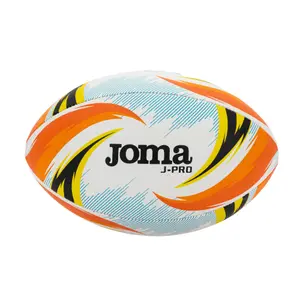


Our Joma page brings together the match balls from the Spanish brand when they're available, with the story of a manufacturer that was born in 1965 near Toledo and is a partner of Spanish rugby, as well as our tips for choosing a competition ball based on your pitch, age, and the weather, then keeping it in top condition.
The match ball, signed by Joma.
From Portillo de Toledo to the Leones
Joma was founded in 1965 by Fructuoso López in Portillo de Toledo, in Castilla-La Mancha, and owes its name to the first syllables of his eldest son's name, José Manuel. Initially a shoe manufacturer, the company specialised in sports footwear from 1968 onwards, then expanded its offering to technical textiles and equipment for numerous team sports. In rugby, it has been the official supplier to the Spanish Federation since 2016, which has renewed the agreement several times: the Leones, the Leonas, and the youth teams wear its jerseys.
The other brands
Match balls are also available from:
All match balls can be found on the match balls page.
Grass, synthetic or rain: adapting your ball
The choice of a match ball also depends on the surface. On a natural grass pitch, grip is key: a surface with marked studs compensates for the mud that builds up on the outer layer. On a s synthetic pitch, increasingly common in clubs, abrasion is higher and wears down the studs faster; a thicker ball is preferred for training, reserving the competition model for matches. Finally, in hot weather, the pressure increases slightly in the sun: it’s better to check it with a gauge just before kick-off rather than upon arrival at the stadium.
Size and handling according to the player
A ball that fits the player's hand improves pass quality. Adults and teenagers from age fifteen play with a size five, whose circumference in width measures between 580 and 620 millimetres according to World Rugby. Players aged ten to fourteen use a size four, while younger children use a size three. For forwards and backs alike, the format is the same in senior competition: it’s the hands that adapt, hence the importance of working on grip with a training ball of the same size as the match ball.
Good deals
Great deals can be found in good deals, promotions, clearance sales, sales, Black Friday. The new arrivals feature the latest collections, and items shipped within 24 hours are prepared and sent out within 24 hours. The year’s highlights follow a stable order: Black Friday in late autumn, the year-end holidays, the winter sales, the French Days in spring, then the summer sales and back-to-school.
Frequently Asked Questions
How to prevent a ball from slipping in the rain?
Choose a match ball with marked studs and keep a towel by the side of the pitch to wipe it in between plays. Dry hands and gripping the ball with the fingers, not the palm, also limit knock-ons.
Is a different ball needed for rugby sevens?
No, rugby sevens is played with the same size five ball as rugby fifteens, according to the same World Rugby standards. Only the match duration, number of players, and some game rules differ.
What ball for a young player starting in a club?
A training ball of the right size, three for under ten years old or four thereafter, sturdy and easy to hold. The match ball is not relevant at this stage: the child progresses mainly by repeating passes and catches.
How to clean a synthetic ball?
With clear water and a soft sponge, without detergent that could dry out the outer layer, then air drying. Regularly check the pressure, as a ball loses some air over time, especially if it has a latex bladder.
What pump to use for a rugby ball?
A hand pump fitted with a gauge and a standard needle is sufficient for a player. Clubs often use an electric compressor with a needle attachment, which is more quick, but you must monitor the pressure to avoid overinflating.






