
Match and training rugby balls


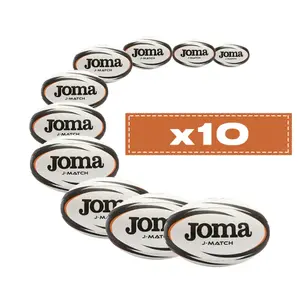
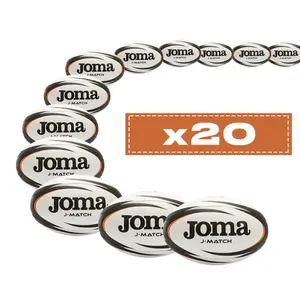
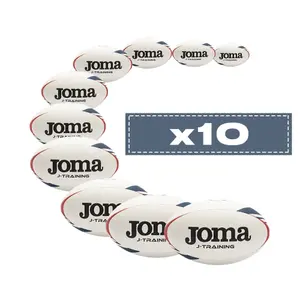
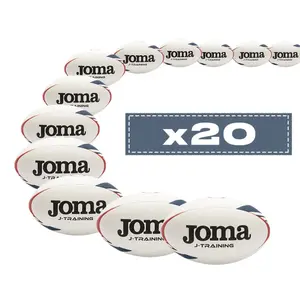
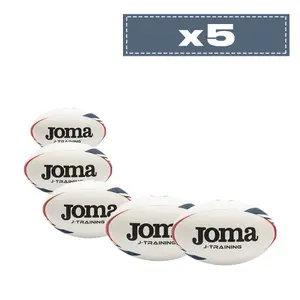
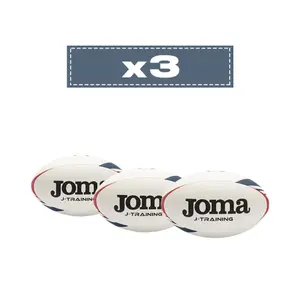
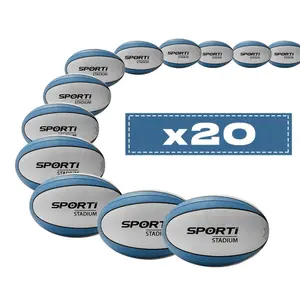
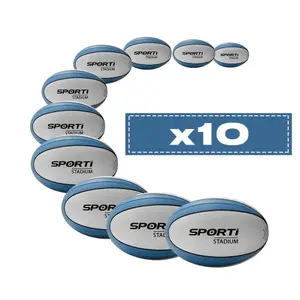
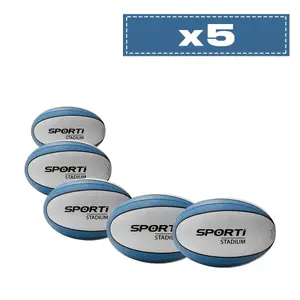
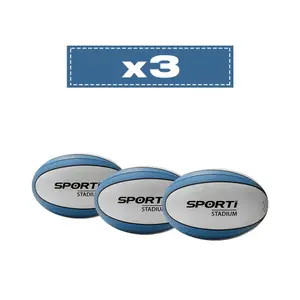
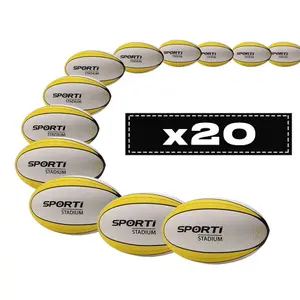
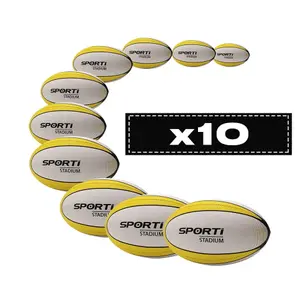
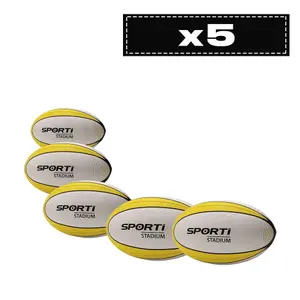
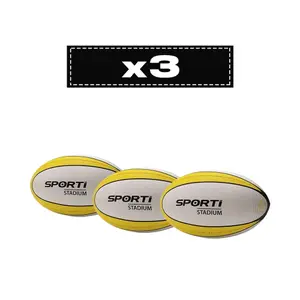

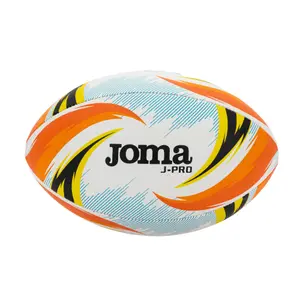


Our selection of rugby balls covers all uses: match balls Gilbert and Berugbe Elipse for competition, training balls Trainer and Sporti that withstand repeated sessions, touch ball, weighted balls to work on passing, foam model for beginners, and balls in the colours of clubs and nations, from supporter balls to size five for seniors.
The oval ball, in all its forms.
What size ball for what age
The size of the ball depends on the age of the player. The size five, meant for adults, is used from around fifteen years old: World Rugby defines it as having a length of 280 to 300 millimetres, a weight of 410 to 460 grams, and a pressure of 0.67 to 0.70 kilograms per square centimetre at kickoff. The size four, which is lighter, is for players aged ten to fourteen, while the size three is for children aged five to nine, whose hands can't yet wrap around an adult oval. Sizes two and one, medium and mini balls, are used for little ones, decoration, and signing.
Ball families
Rugby balls come in:
All the equipment is gathered on the equipment page.
Match, training, or touch ball
A match ball prioritises grip and precision when kicked: the Gilbert Kinetica and the Berugbe Elipse Dual have a fine pimpled surface, and the Elipse Wet maintains its grip when rain makes the surface slippery. The training ball, like the Trainer from Gilbert or the Sporti model, uses a thicker outer layer that withstands hard ground and the hundreds of passes in a session. The Gilbert Touch, in size four, is used for touch rugby, which is played without tackles, where a smaller ball promotes quick passes. Finally, the Gilbert Heritage recalls the look of old leather balls.
Educational balls: foam, weighted, and lots
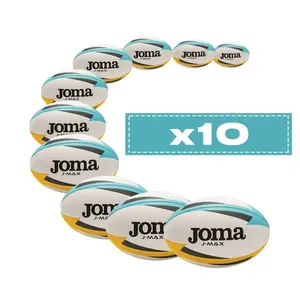
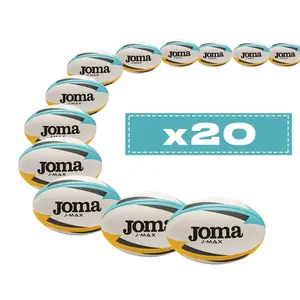
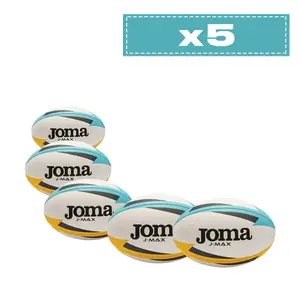
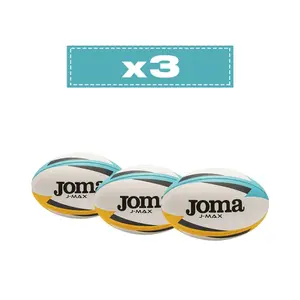
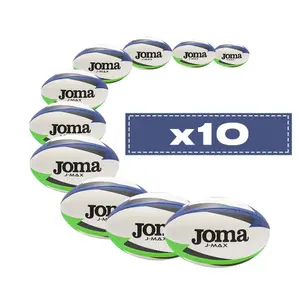
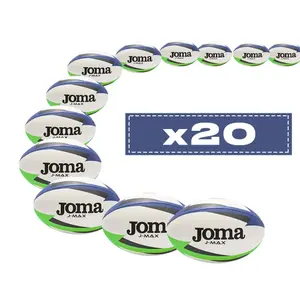
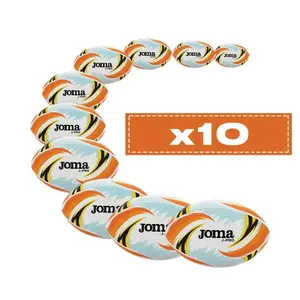
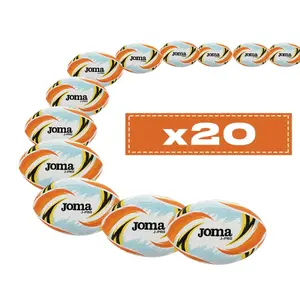
For beginners, the foam ball Sporti Soft'rugby takes the fear out of catching for younger players, who can keep their eyes on the ball instead of protecting themselves. The weighted ball Morgan from Gilbert, heavier than a standard oval, strengthens the wrists and lengthens passing; it's reserved for short sessions to spare the shoulders. The ball lots, like the one with ten balls in the colours of Wales, equip an entire group at once. For supporters, the nation balls, from France to Tonga via South Africa, are played with among friends or displayed.
Good deals
Good bargains can be found in the good deals, promotions, sales, discounts, Black Friday. The new arrivals showcase the latest collections, and items shipped in 24h are prepared and sent within 24 hours. The key moments of the year follow a steady order: Black Friday in late autumn, the festive season, winter sales, spring's French Days, then summer sales and back-to-school.
Frequently asked questions
How to inflate a rugby ball without damaging the valve?
Moisten the needle, push it straight into the valve, then inflate to the pressure marked next to it, checking with the gauge. A dry or angled needle can split the valve and cause a slow leak.
Why is the rugby ball oval?
The first balls were stitched around a pig's bladder, whose elongated shape resulted in the oval. The introduction of rubber bladders in the nineteenth century standardised this shape, which makes it easier to handle with two hands and carry against the body.
Why is the ball often called a Gilbert?
Because William Gilbert, a shoemaker in Rugby, was already supplying balls to Rugby School in 1823, the year when, according to legend, a student picked up the ball. The brand has also provided the official ball for every World Cup since 1995.
How to make a spin pass?
Hold the ball with both hands, the back hand underneath, then push it towards the teammate while applying rotation with that hand. The arms should end stretched towards the target: the spin stabilises the ball and gives it distance.
What is the best ball for practising alone?
A robust training ball, in the right size, is better than a match model for passing against a wall and kicking practice. Its thick covering withstands concrete and repeated bounces, where the pimples of a competition ball would wear out quickly.






