
Match Balls Force XV
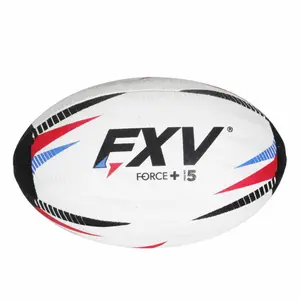
Our Force XV page brings together match balls from the French brand specialised in rugby when they are available, along with our tips for choosing a ball based on age group, organising club equipment, and maintaining balls throughout matches, whether you are a player, coach, or team manager.
The match ball, branded Force XV.
A brand designed for amateur clubs
Force XV takes its name from rugby fifteens, with the XV representing the number of players in a team in Roman numerals. The French brand, entirely focused on rugby, primarily caters to amateur clubs and rugby schools, where there is a need for robust equipment that can withstand several training sessions a week. Its balls align with this philosophy: models designed for club practice, from Sunday matches to weekly training sessions. For a team manager, equipping with a specialized brand also simplifies the renewal of the ball stock from one year to the next.
Other brands
Match balls are also available from:
All match balls are gathered on the match balls page.
Organising a club's balls
A well-organised club distinguishes three stocks of balls. The match balls, new or nearly so, are only used on match days and remain inflated to the regulated pressure. The training balls, which are more numerous, circulate during training sessions: ideally, there should be one for every two or three players to increase ball touches. Lastly, worn balls are used for warm-ups and kicking practice. A ball bag in netting carries about ten units and allows wet balls to dry, while an electric pump with a pressure gauge saves valuable time before kick-off.
The right ball for each age group
In rugby school, the ball follows the child's progression. The younger ones, up to about nine years old, play with a size three ball, which they can handle and throw without bracing it against their chest. Between ten and fourteen, the size four prepares for the adult format, and then the size five takes over from the age of fifteen and into the senior category. For a coach, having all three sizes allows for adapting sessions to the group. The weight difference is noticeable: a standard adult ball weighs between 410 and 460 grams, which is significantly more than a children's size.
Great deals
Good deals can be found in the great deals, promotions, clearance, sales, and Black Friday. The new arrivals showcase the latest collections, and items shipped in 24h are prepared and dispatched within 24 hours. The key events of the year follow a stable order: Black Friday in late autumn, the end-of-year holidays, winter sales, French Days in spring, followed by summer sales and the start of the new school year.
Frequently Asked Questions
Should I moisten the inflation needle?
Yes, a drop of water or suitable lubricant allows the needle to slide into the valve without tearing it. A dry needle, forced or inserted at an angle, will eventually split the valve, resulting in the ball losing air within a few hours.
How do I clean a muddy ball?
Rinse it with clear water while gently scrubbing with a sponge, avoiding harsh soap that would dry out the cover. Wipe it down and then let it dry in the air, in the ball bag or placed on a rack, rather than against a radiator.
Can a match ball be used on synthetic turf?
Yes, but synthetic grass wears down the studs faster than natural grass. Clubs playing on this type of surface reserve their new balls for matches and train their players with thicker balls.
Why does a ball lose air over time?
A latex bladder naturally allows air to filter through, and a damaged valve from a dry needle exacerbates the leak. A ball that deflates within a few hours often has a split valve, while a slow decrease over several days is normal.
What pressure should I inflate a children's ball to?
Follow the guidelines printed near the valve, which is generally lower than for an adult ball. A size three or four ball that is slightly under-inflated is softer upon reception, which is reassuring for young players.






