
Match balls Errea
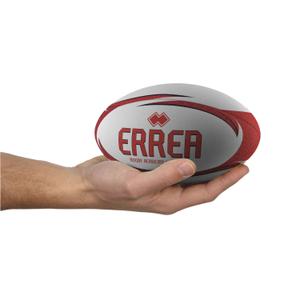
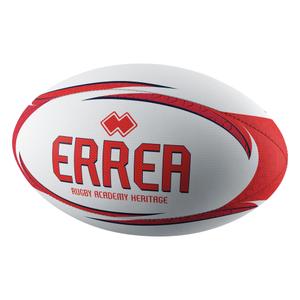
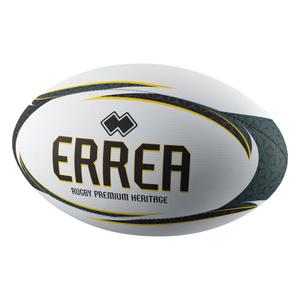
Our Errea page features match balls from the Italian brand when they are available, along with the story of a sportswear manufacturer born near Parma in 1988 and heavily involved in European rugby, as well as our tips for choosing a competition ball, inflating it to the right pressure, and outfitting an entire team in the same colours.
The match ball, by Errea.
A Parma brand committed to European rugby
Erreà was born in 1988 in San Polo di Torrile, near Parma, founded by Angelo Gandolfi. A specialist in team wear, the Italian brand has made a strong name for itself in rugby: it has dressed clubs such as Perpignan, Agen, Grenoble and Benetton Treviso, extended its partnership with Oyonnax in 2024 and signed a four-year agreement with Rugby Europe at the end of 2019, the body that organises continental competitions for nations outside the Six Nations Tournament. The Norway national team has also worn its shirts.
The other brands
Match balls are also available from:
All match balls are gathered on the match balls page.
Inflating to the right pressure, the neglected step
A poorly inflated ball changes everything: too soft, it collapses upon reception and goes short when kicked; too hard, it bounces unpredictably and stresses the seams. World Rugby sets the pressure of a match ball between 0.67 and 0.70 kilograms per square centimetre. To achieve this, a pump fitted with a manometer and a previously moistened needle is used, inserted straight into the valve to avoid piercing it. It is checked again before each match, as a bladder made of latex naturally loses a bit of air from one day to the next.
How many balls to have for a team
An amateur team benefits from distinguishing its balls according to their use. For matches, several match balls in good condition should be provided, so that the game can be restarted without delay when a ball goes into the stands or ends up in the mud. They are rotated from one match to another so that they wear out at the same rate and maintain a consistent grip. Training sessions are held with training balls, which are thicker and preserve the competition balls. Each ball should also be marked with the club name using a permanent marker, near the valve, to avoid losses during transport.
Good deals
Great bargains can be found in the good deals, promotions, clearance, sales, Black Friday. The new arrivals showcase the latest collections, and items shipped within 24 hours are prepared and sent in 24 hours. The key events of the year follow a stable order: Black Friday at the end of autumn, the end of year holidays, the winter sales, the French Days in spring, followed by the summer sales and back-to-school.
Frequently asked questions
How can you tell a match ball from a training ball?
The match ball has finer and more numerous grip bumps, a softer cover, and is well-balanced for kicking. The training ball, with a thicker cover, is designed for durability on hard pitches and repeated sessions.
What size ball for an adult?
Size five, used by adults and teenagers from about fifteen years old. It measures between 280 and 300 millimetres long and weighs 410 to 460 grams according to World Rugby, with smaller sizes reserved for younger players.
Does a match ball stay inflated between matches?
Yes, at a slightly lower pressure than during the match, which protects the bladder without deforming the cover. It is reinflated to the regulation pressure on the day of the match, checking with the manometer.
How to dry a ball soaked by rain?
Wipe it with a towel, then let it air dry in a temperate room, away from a heat source which could make the cover crack. Once dry, check its pressure before storing it in the bag.
Why does a rugby ball have four panels?
The four panels stitched together give the ball its oval and symmetrical shape, which is essential for a consistent trajectory. A well-aligned seam prevents imbalances that could cause the ball to veer unpredictably or bounce too erratically.






