
Stade Français balloons in the club's colours
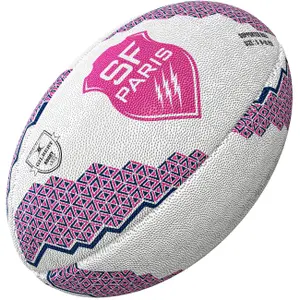
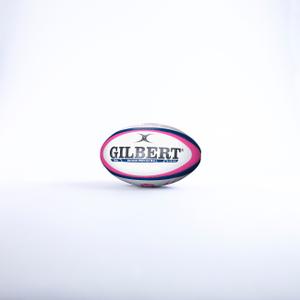
Our Stade Français Balls page brings together rugby balls in the colours of the Parisian club when they are available, with the story of a pioneer founded in 1883, from its titles before 1910 to its revival under Max Guazzini, along with our tips for choosing the right size of a ball, from the mini collectible format to the playing model.
The ball of your club, in your hands.
A pioneer from 1883 back at the top in 1998
Founded in 1883, Stade Français dominated the early years of the championship, with titles in 1893, 1894, 1895, 1897, 1898, 1901, 1903 and 1908, before leaving the elite for decades. Its revival began in 1992 with the arrival of Max Guazzini as president: the club climbed back up and became champions of France again in 1998, and then in 2000, 2003, 2004 and 2007. A new victory came in 2015 against Clermont, and the European Challenge joined the trophy cabinet in 2017. In the meantime, the club has brought in record crowds to Stade de France for championship matches.
The other club balls
Club balls also come in various types:
- Stade Toulousain Balls.
- Racing 92 Balls.
- Castres Olympique Balls.
- ASM Clermont Auvergne Balls.
- FC Grenoble Rugby Balls.
All club balls are gathered on the club balls page.
Pink, a signature that appeared in 2005
The pink jersey appeared in 2005, initially as a pink and blue away kit designed by Max Guazzini to add some glamour to rugby; pink then became the club's dominant colour. Stade Français was previously identified with blue and red, its historical colours. Since 2013, it has played at the Jean-Bouin stadium, rebuilt facing the Parc des Princes, in the sixteenth arrondissement of Paris. A pink and blue ball remains one of the most recognisable items in French rugby, well beyond just the Parisian supporters.
Mini ball or size five: what use
For a supporter who collects, the mini ball in size one sits on a desk and fits in a pocket on match day. The mid-sized ball, a step up, is suitable for younger hands. To play for real, we switch to standard sizes: size three before the age of ten, size four from ten to fourteen years old, size five beyond. A printed supporter ball doesn’t have the grip of a match ball, but it works well for throws on an afternoon in the Bois de Boulogne, just a stone's throw from Jean-Bouin.
Good deals
Good deals can be found in the good plans, promotions, clearance sales, sales, Black Friday. The new arrivals showcase the latest collections, and items shipped in 24h are prepared and dispatched within 24 hours. The highlights of the year occur in a predictable order: Black Friday in late autumn, the end-of-year holidays, the winter sales, the French Days of spring, followed by the summer sales and the back-to-school season.
Frequently asked questions
Has Stade Français played at Stade de France?
Yes, from 2005, the club relocated several championship matches there, with attendance figures close to eighty thousand spectators. These entertainment matches, featuring pre-match shows, changed the image of club rugby in France.
Is there a mini ball for Stade Français?
Mini balls in size one often showcase the colours of clubs from the Top 14, and the Stade Français version is available here when in stock. Pink and blue, it can be collected and signed easily due to its small size.
Can a pink and blue ball be washed?
Yes, with lukewarm clear water and a soft sponge, without detergent or brushes that would damage the printing. It should then be wiped down and left to dry at room temperature, with the valve facing up to prevent any water ingress.
How to preserve signatures on a ball?
Avoid touching the signed area, as finger friction can fade the ink over time. Storing it under a dome or in a display case, away from sunlight, protects both the signatures and the ball's colours.
Who was Jean Bouin, who gave his name to the stadium?
Jean Bouin was a marathon runner from Marseille, who won a silver medal in the five thousand metres at the Stockholm Olympics in 1912. He died at the front in September 1914, at the beginning of the First World War.






