
Guided strength training equipment
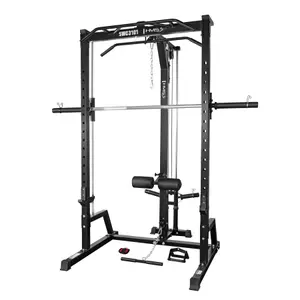
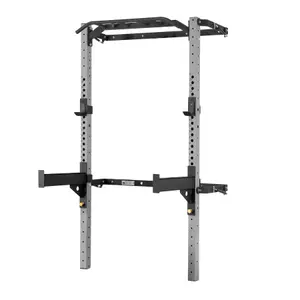
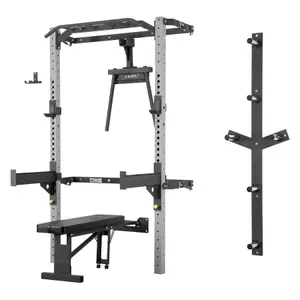
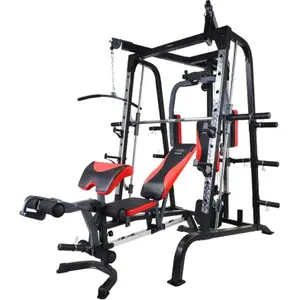
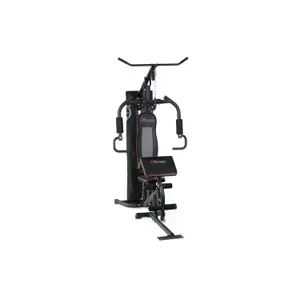
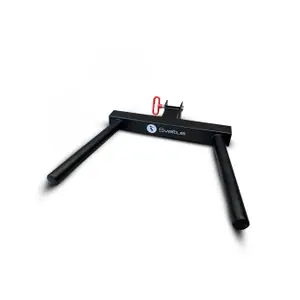
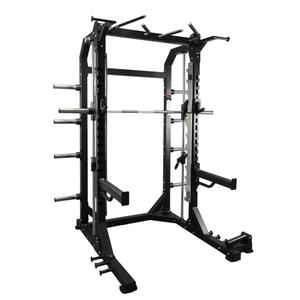
Our strength training equipment page showcases the guided machines when available: leg press, Smith machine, sissy squat machine, dip bar, and guided weight stations. It is aimed at athletes who want to strengthen a muscle in a targeted way, learn a movement safely, or get back into training after an injury, along with our tips for selection and usage.
The guided movement, safely.
Why train on a guided machine
A weight machine imposes a trajectory: the weight slides on rails or pivots around an axis, and the user doesn't have to stabilise it. This means you can push close to failure without the risk of losing your balance, making it the ideal tool for isolating a muscle, learning a movement, or training without a partner. For a rugby player, the machine mainly serves as a supplement: working with free weights engages stabiliser muscles more, which are heavily used in contact, while the machine allows you to target a weak spot or load the legs while protecting the back.
The other equipment
Weight training also comes in:
- Weight benches.
- Dumbbells.
- Cages and racks.
- Bars and weights.
- Kettlebells.
- Medicine balls.
- Weight training accessories.
All the weight training is gathered on the weight training page.
Leg press, Smith machine, sissy squat and dip bar
The leg press, often inclined at forty-five degrees, allows you to lift heavy with your legs while keeping your back pressed against the backrest. The Smith machine, developed in the 1950s by Jack LaLanne and later refined at Rudy Smith's initiative, who lent it his name, guides a bar on two vertical rails and offers safety hooks at each notch. The sissy squat machine locks the ankles and calves to isolate the quadriceps, a useful exercise for strengthening the knee. Finally, the dip bar works the triceps and lower pecs with body weight, with the option to add weights.
A machine during recovery from injury
Guided machines play an important role in rehabilitation. After lower back pain, the leg press strengthens the legs without vertical load on the spine, unlike barbell squats. Following a sprain or knee surgery, the fixed trajectory and the ability to limit the range allow for a gradual return to loading, focusing on the part of the movement that doesn't cause pain. The load, adjustable in small increments, facilitates fine progress. You follow the protocol defined with the physiotherapist, then move back to free weights as stability returns.
Good deals
The best deals can be found in the good deals, promotions, clearance, sales, and Black Friday. The new arrivals show the latest collections, and items shipped in 24h are prepared and sent within 24 hours. The key events of the year follow a stable order: the Black Friday at the end of autumn, the year-end holidays, the winter sales, the French Days of spring, then the summer sales and back-to-school.
Frequently asked questions
Which weight machine is the most complete?
A multifunction station that combines high and low pulleys, a bench, and a leg press covers most muscle groups. A Smith machine combined with an adjustable bench also offers a wide range of exercises in a reasonable footprint.
Which machine should I choose to lose belly fat?
No machine targets abdominal fat specifically. Machines that engage large muscle groups, like the leg press, increase energy expenditure; combined with cardio and a suitable diet, they contribute to fat loss.
Can I replace free squats with guided squats?
Not completely: the bar guided on rails reduces the work of the stabilising muscles and imposes a straight-line path for the movement. It remains valuable for training alone safely, for isolating the legs, or for resuming after an injury.
How to properly adjust a weight machine?
You align the machine's pivot point with the joint being worked, the knee for a leg extension, the elbow for a flexion. The seat and stops are adjusted before loading, and the movement is tested without load throughout the full range.
How much space should I allow for a machine at home?
You measure the footprint of the machine, adding at least sixty centimetres of clearance around it for moving around and loading weights. The ceiling height matters for a Smith machine, and the floor must support the total weight, including the load.






